

Building a comic platform from zero-from MVP to a Top 3 App Store product.
In early 2020, I joined NHN Vietnam as one of the first product designers while Comico Vietnam was preparing for its MVP release. The challenge was to build a consumer product from the ground up-designing features while simultaneously establishing the design workflow the team needed to scale.
Unlike joining an established product, the challenge at Comico Vietnam was to build a consumer product from the ground up. The initial product specification already existed, but design assets were scattered across multiple design tools and documentation formats-making collaboration increasingly difficult as the team grew.
Besides designing product features, one of my first contributions was establishing a unified design workflow for the entire team. Systems thinking before screen thinking.
02 / Responsibilities
Complete ownership across the product lifecycle.
Throughout the project I owned the full design lifecycle for multiple features-from research through release and iteration.
Phase 01
Product Discovery
- User research
- Surveys
- One-on-one interviews
- Comic community events
- Competitor analysis
Phase 02
Product Definition
- Information architecture
- User flows
- Low-fidelity wireframes
- Feature validation
Phase 03
Product Delivery
- High-fidelity UI
- Interactive prototypes
- Functional specification documents
- Developer handoff
- QA support
Phase 04
Product Improvement
- Analyze user feedback
- Work with Marketing & Business
- Prioritize improvements
- Iterate after release
When I joined the project, design resources were fragmented. Different designers worked with different software. Documentation existed in multiple formats. Component reuse was almost impossible. As the product expanded, maintaining consistency became increasingly expensive.
Solution
I proposed migrating the entire product into Figma. Instead of simply moving screens, we reorganized the product into a scalable design workspace-shared component library, design tokens, reusable layouts, standardized naming conventions, organized documentation, and a unified handoff workflow.
Although relatively simple by today's standards, this significantly improved collaboration across designers and engineers, and laid the foundation for future product development.
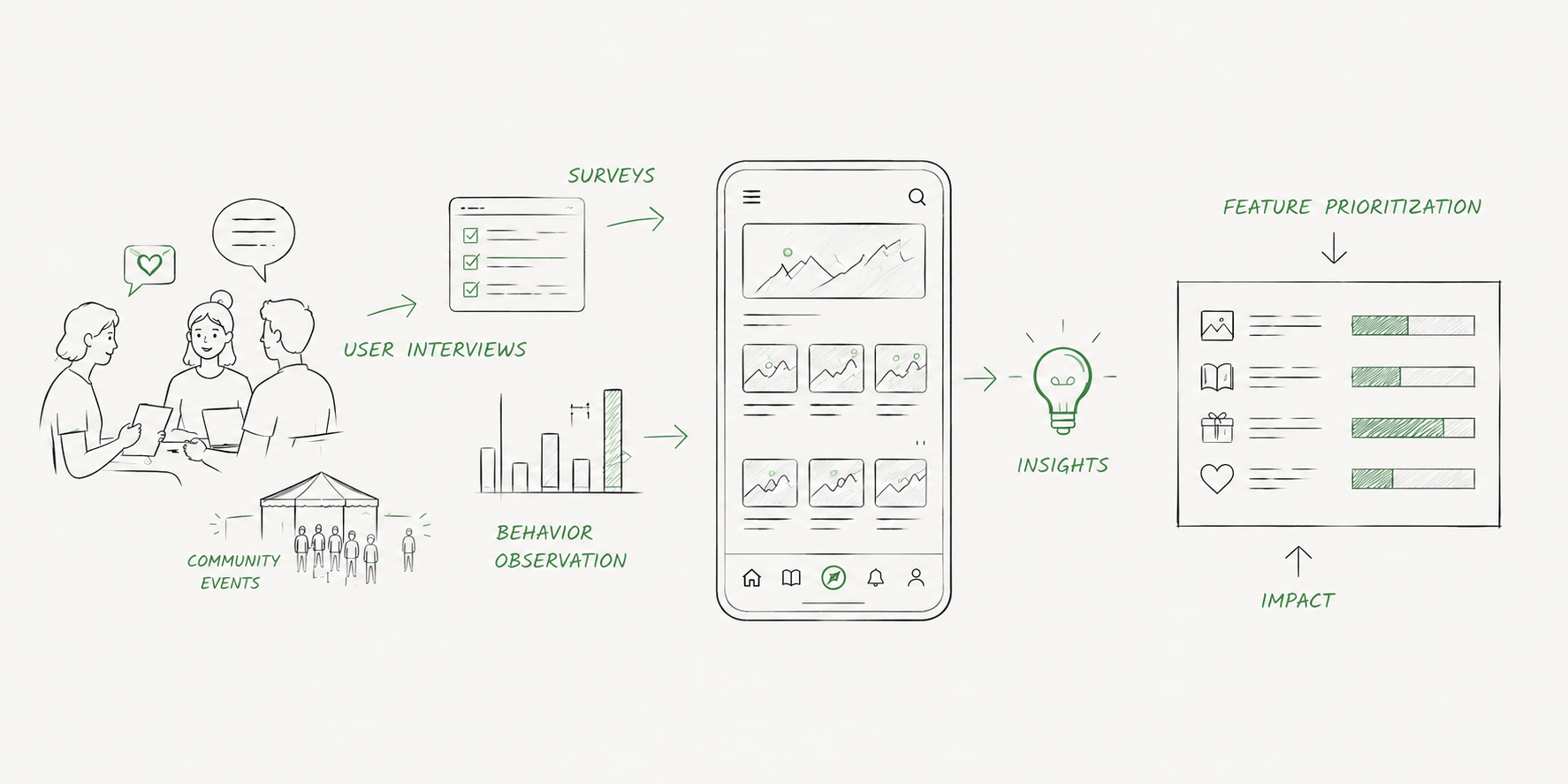
Unlike enterprise software, consumer products depend heavily on emotion and habit. We continuously validated assumptions with real readers through online surveys, user interviews, reading behavior observation, community comic events, social media feedback, and customer support reports.
Rather than asking users what features they wanted, we focused on understanding why people read comics every day, when they stopped, what motivated premium purchases, and what created long-term engagement. These insights directly influenced feature prioritization.
Comico was the first product where I was responsible for writing functional specification documents for every feature I designed.
Initially, I thought documentation was simply describing screens. As I worked with engineers, QA, business, and marketing teams, I realized documentation is actually about translating product thinking into a shared language that every team can understand.
For every feature, I had to define:
- Business goals
- User flows
- Functional requirements
- Business rules
- Edge cases
- Error and empty states
- Validation rules
- Dependencies between features
- Acceptance criteria
- Analytics events when necessary
Writing documentation forced me to think beyond UI. Instead of asking "How should this screen look?", I learned to ask: What problem are we solving? What scenarios can happen? What happens if something fails? What information does engineering need? How will QA validate the feature? How can stakeholders understand the behavior without opening Figma?
This experience fundamentally changed how I approach product design. It taught me to think in systems, behaviors, and product logic rather than individual screens-becoming the foundation of my later work in Design Systems, Product Architecture, and AI-native products.
FIG.02 · From problem to production - the specification pipeline
DM-CP / 002
03 / Process
End-to-end product design.
Each product designer owned multiple features from discovery through release. Owning features end-to-end helped me understand product decisions beyond interface design.
01
Research
02
Insights
03
Business Discussion
04
Problem Definition
05
Wireframes
06
UI Design
07
Specification
08
Development
09
QA
10
Release
11
Iteration → back to 01
Selected Features
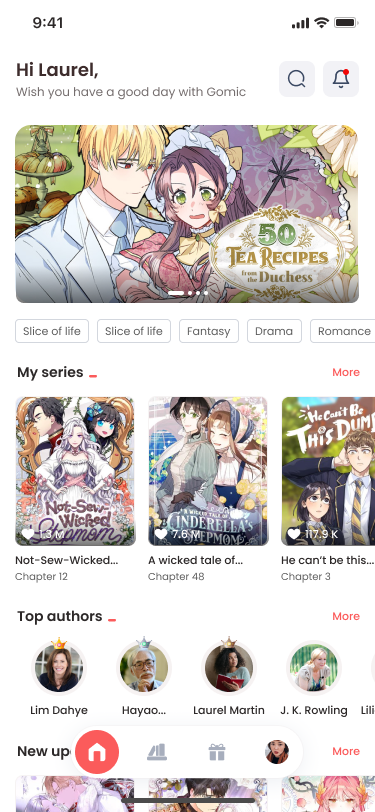
Home
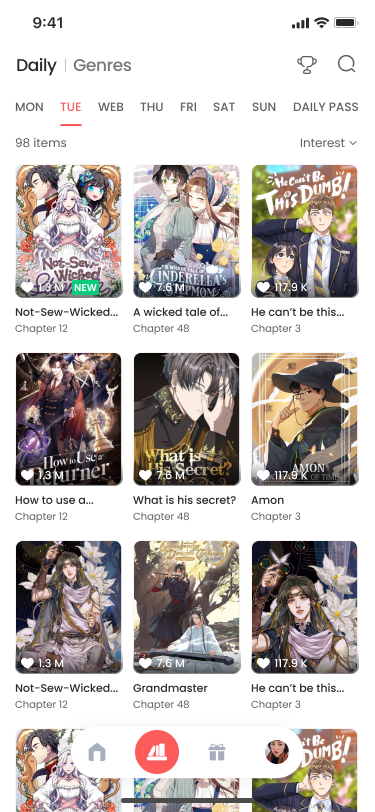
Daily / Genre Discovery
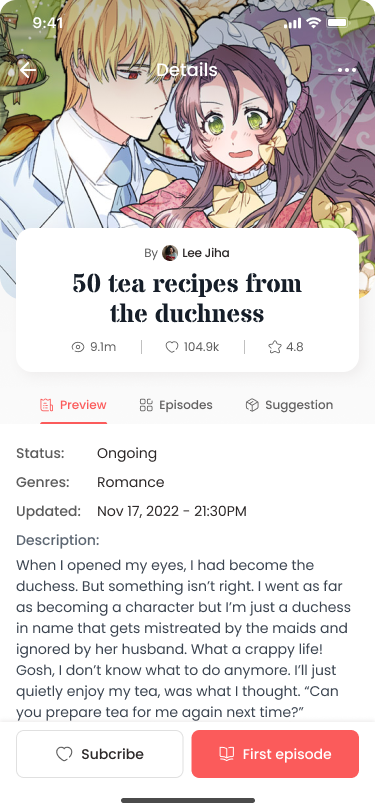
Comic Detail
Episode List
Vertical Reader
User Profile
Notifications
Subscription Flow
Payment
Each feature was designed through the complete product lifecycle-not only UI execution.
04 / Production UI
Consumer loop on the surface.
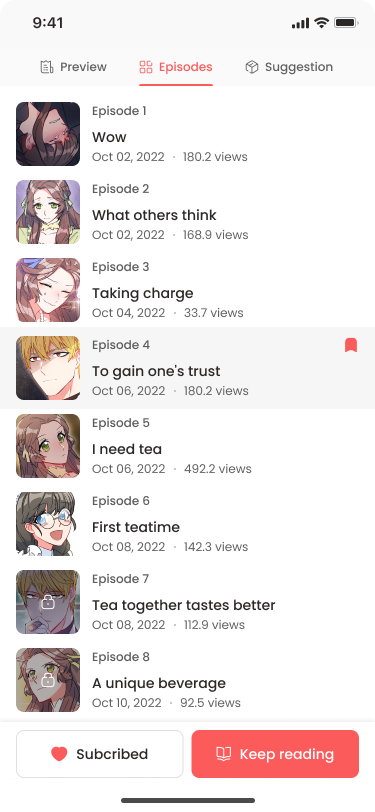
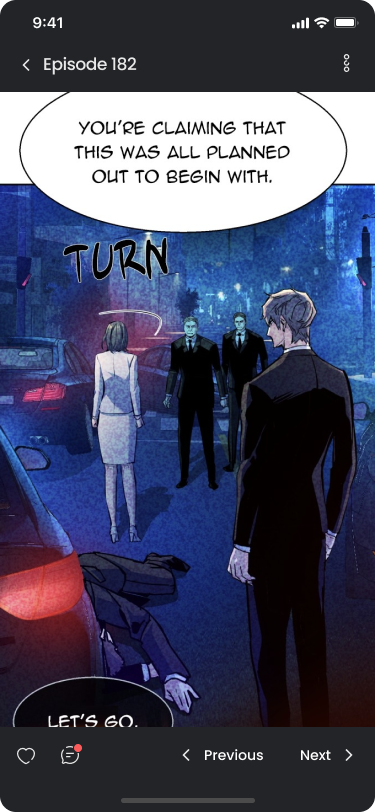
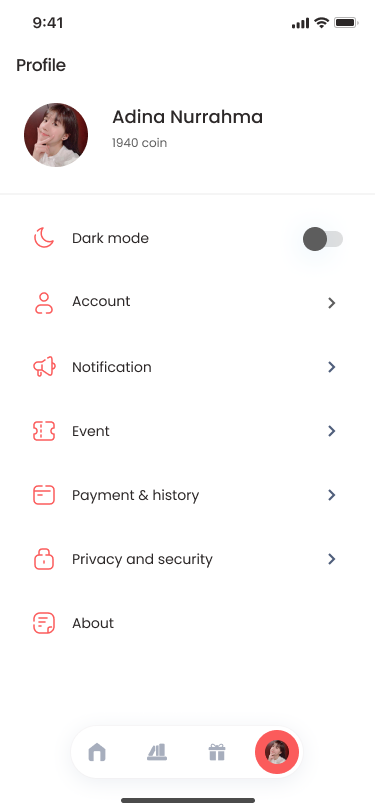
Screens covering discovery, sampling, reading, and return. The UI is deliberately quiet-comic covers are loud, so the chrome around them does as little as possible.
05 / Results
Strong launch. Real traction.
Within the first year after launch, the product demonstrated strong user acquisition and engagement in the Vietnamese market.
Top 10
Comics & Books on Google Play Vietnam
Top 3
App Store Books category
1st
Localized Comico experience for Vietnam
3 yrs
Operating before market withdrawal
Although user growth exceeded expectations, revenue did not. Several factors contributed:
- Vietnam's digital comic market was still emerging.
- Users were highly price-sensitive.
- Paid reading habits were not yet mature.
- COVID-19 significantly changed market conditions.
- The business model relied heavily on premium chapter purchases.
Eventually, after approximately three years of operation, NHN decided to withdraw from the Vietnamese market and discontinue the product.
06 / What I Learned
Building products under real business constraints.
One of the most valuable lessons from Comico wasn't about designing interfaces-it was about what it takes for a product to survive.
01
Product success is multidimensional
A product can achieve excellent usability, strong engagement, and impressive rankings while still failing commercially. Good UX alone cannot guarantee a sustainable business.
02
Research never stops after launch
The most valuable insights emerged after release. Watching how people actually behaved often challenged assumptions made during planning. Continuous discovery became just as important as shipping new features.
03
Design is a team sport
Great consumer products are shaped through close collaboration between product, engineering, marketing, business, and content teams-not by design alone.
04
Systems matter as products scale
Migrating the team to a shared design system early on significantly reduced design debt and enabled faster iteration. This experience became the foundation of my later work in design systems and product architecture.
Looking back, Comico was where I transitioned from designing interfaces to designing products. It taught me how research, business strategy, engineering constraints, and user experience intersect to create-or limit-a product's success.
Although Comico Vietnam eventually closed, the experience fundamentally shaped how I approach product design today: not as a collection of screens, but as a system balancing user value, business viability, and long-term scalability.